Brand archetypes are these super powerful frameworks. They’re like strategic filters for all your marketing decisions, not just some label. They really make sure everything’s consistent, help you connect deeply with your audience, and let businesses cut through all the market noise with messaging that feels authentic and really hits home. Ultimately, this builds trust and gets you recognized. Understanding archetypes brand is essential for any business looking to stay competitive.
Honestly? Lots of businesses just churn out generic marketing. They never really connect with their audience in a deep way or stand out effectively. The real secret to building a brand that sticks around isn't about some surface-level branding. It’s using universal patterns that can guide every single strategic choice you make.
TL;DR: Brand archetypes aren’t just a label; they’re super strong strategic filters for every marketing decision. If you can align your brand with a core archetype that’s really driven by what your audience wants, you get amazing clarity and consistency. This lets you cut through all the market noise. It’s how you build genuine trust and make sure every marketing effort truly resonates, helping your brand stand out big time in a crowded space.
Beyond Labels: Archetypes as Strategic Filters, Not Just Descriptors
For too long, brand archetypes felt like this fun-but-fluffy branding exercise. You know, a "nice-to-have" label you’d stick on a cool mood board and then completely forget about. But that totally misses the point. It’s time we all changed our perspective. Stop thinking of archetypes as just descriptive labels and start using them as strategic filters for every single marketing decision you make.
Real brand power isn't about having a cool personality. It’s about having one that's consistent. It’s building a strategic foundation that makes your brand instantly recognizable and completely yours, no matter the channel or campaign. That's where archetypes become a practical tool. As the team at Helms Workshop points out, a defined archetype gives you “clarity in decision-making.”
Picture this: your team is brainstorming a new campaign. Instead of asking, "Is this creative enough?" or "Does this fit our current goals?" you ask something much more powerful: "Does this align with our archetype?" This simple shift changes the whole conversation. Suddenly, you have a North Star, an objective way to evaluate absolutely everything – from ad copy and visual design to influencer partnerships and even new product ideas. An effective archetypes brand strategy doesn't box you in; it actually gives you the freedom to create with focus and purpose.
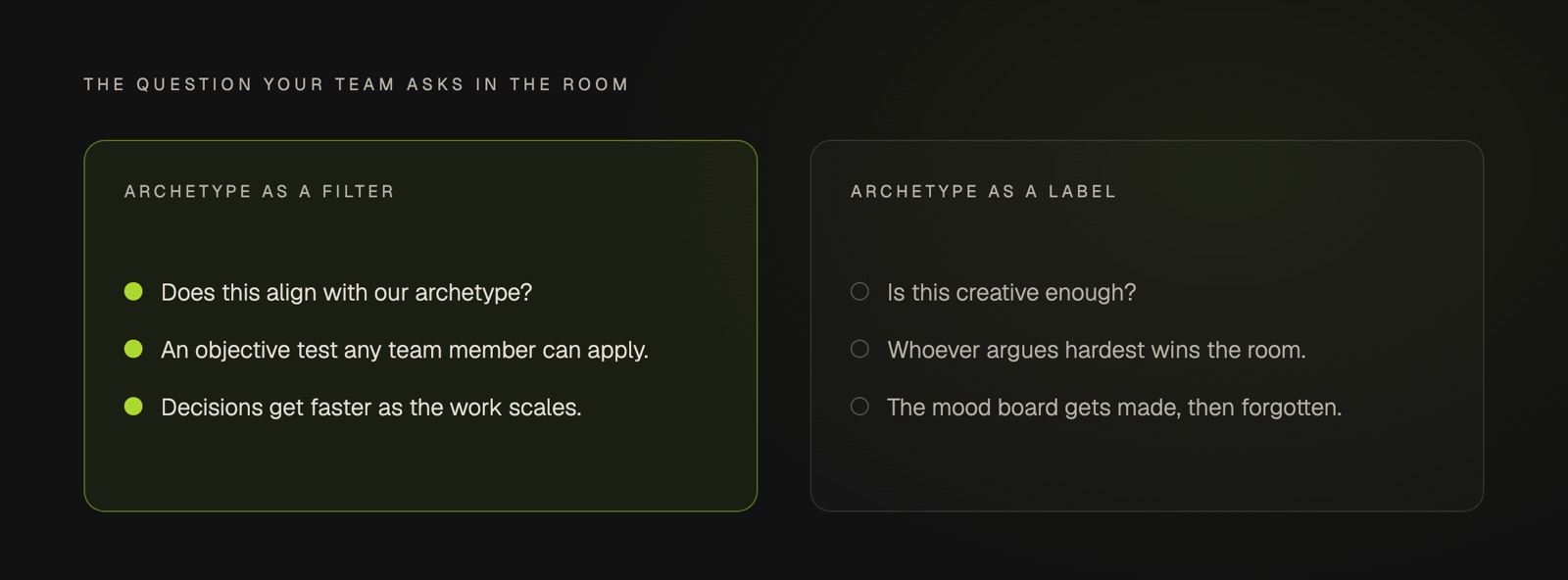
Marketing experts say the same thing, emphasizing that once you define a clear archetype, it becomes a decision filter for your entire marketing ecosystem. It moves your brand from just reacting to trends to being proactive, building authority and momentum that really grows over time. The goal is to connect with your audience on a deeper level, tapping into those fundamental desires and motivations that the archetype represents. When your brand consistently speaks and acts in a way that resonates with those deep-seated human needs, you build more than just customers. You build a community of advocates.
What are Brand Archetypes?
Brand archetypes are symbolic character models. They represent universal human motivations, values, and personalities. Based on Carl Jung's psychological theories, these archetypes tap into what he called the collective unconscious, giving you a powerful shortcut to build instant recognition and emotional connection with your audience. They do this by basically embodying a familiar pattern of behavior and identity.
Think of them like your brand’s personality DNA. Just like characters in stories and myths-The Hero, The Sage, The Jester-are instantly recognizable, a well-defined archetype makes your brand feel familiar and instinctively understood. It provides a framework for how your brand should act, speak, and present itself to the world.
What is a brand archetype? A brand archetype is a universally understood character or symbol. It represents a specific set of values, traits, and motivations. In marketing, businesses pick an archetype (like The Creator, The Ruler, or The Explorer) to define their brand’s personality, guide their messaging, and build a consistent, emotionally resonant connection with their target audience.
Why are Brand Archetypes Important for Modern Marketing?
Look, in a world just crammed with marketing messages, being loud isn't enough anymore. You've got to be clear. You've got to be consistent. And most importantly, you have to be memorable. Brand archetypes are the key to doing all three. They give you the strategic foundation you need to stop just shouting into the void and start building real authority.
Here’s why they’re mission-critical for any business serious about growth, especially right now: When it comes to archetypes brand, the approach matters more than the scale.
-
Unshakable Consistency: A defined archetype makes sure your brand’s voice, tone, and visual identity stay consistent across every single touchpoint. From a social media post, to a sales deck, to a customer service email – everything feels like it’s coming from one unified source. This kind of consistency really builds trust and makes your brand feel reliable and authentic.
-
Deep Audience Connection: Archetypes work because they tap into shared human experiences. When you align with an archetype that mirrors what your ideal customer aspires to, or solves their core emotional need, you create a bond that goes way beyond just a transaction. Your brand isn't just a provider anymore; it becomes a partner, a guide, or even an inspiration. This connection is ABSOLUTELY vital for building a loyal following.
-
Powerful Differentiation: What do you do when you and your competitors sell similar products at similar prices? You differentiate on personality, that’s what. An archetypes brand strategy lets you carve out a truly unique space in the market. While a competitor might go for the aggressive, dominant "Ruler" archetype, you could totally thrive as the nurturing "Caregiver" or the innovative "Creator." This attracts a completely different segment of the market, a group that feels seen and understood by you.
Research actually confirms that having a clear identity allows brands to translate archetypes into concrete actions that build trust and cut through market noise. It’s the difference between being just another option and being the only choice. By understanding the core motivations of all 12 brand archetypes, you can select the one that gives you an edge. Plus, you can even explore a brand archetypes wheel to see how your chosen identity fits in with the others. This helps you craft a more nuanced and distinct market position.
Translating Your Archetypes Brand into Actionable Marketing Decisions
An archetype is useless if it just sits there on a PowerPoint slide. Its real value totally unlocks when you use it to make faster, clearer decisions every single day. Your archetype should become the operating system for your entire marketing department. It’s the gatekeeper for what you do and, just as importantly, what you don’t do.
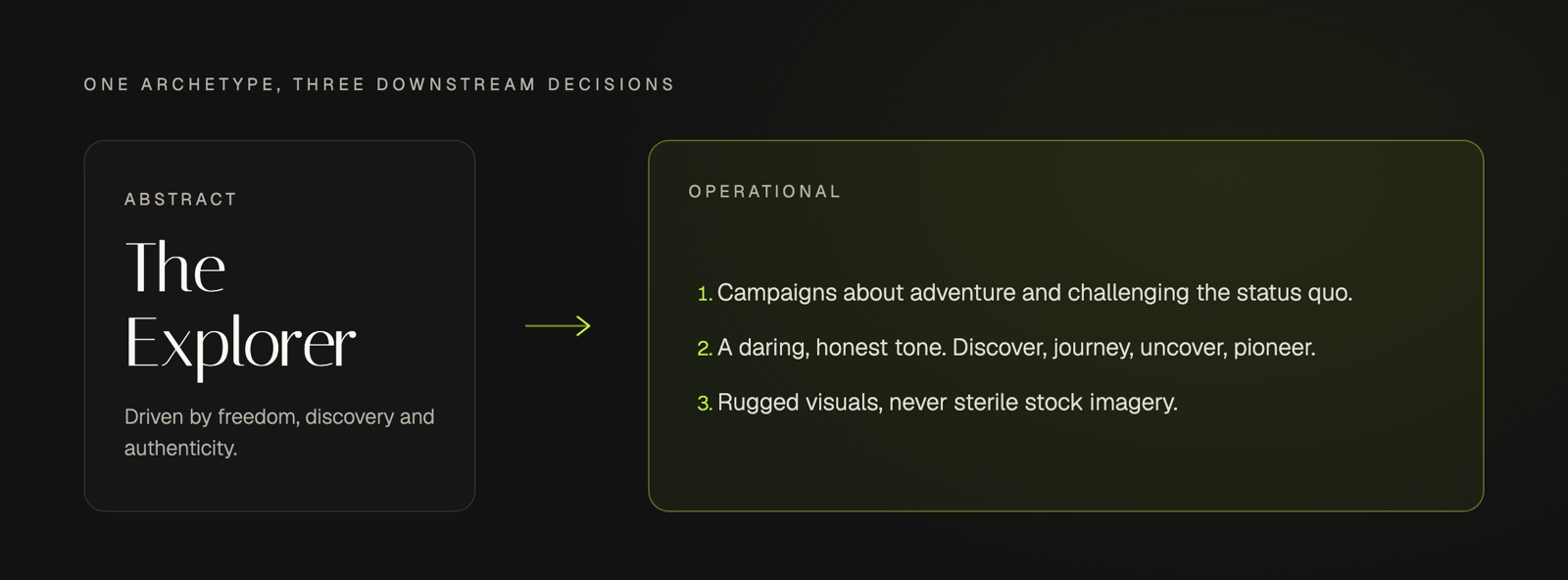
Let's get practical. How does this actually work in the real world? Imagine your brand's archetype is The Explorer, always driven by a desire for freedom, discovery, and authenticity. Here’s how that one choice informs your entire strategy:
-
Campaign Themes: Forget those bland, "here are our product features" campaigns. The Explorer brand would launch campaigns all about adventure, challenging the status quo, and forging new paths. Think user-generated content from some super remote locations, partnerships with adventure travel bloggers, or challenges that get your audience to break out of their routine.
-
Content and Tone of Voice: Your blog posts, videos, and social media captions would be packed with words like "discover," "journey," "uncover," and "pioneer." The tone would be daring, honest, and rugged. You wouldn't use polished, corporate jargon; you’d speak directly and authentically, like a seasoned traveler sharing a story around a roaring campfire.
-
Visual Identity: Your visuals would absolutely reflect the archetype. Instead of sterile stock photos of people in boardrooms, you’d use windswept landscapes, gritty textures, and candid shots of people truly experiencing the world. Your color palette might be earthy and natural, not bright and synthetic.
- Partnerships and Collaborations: When a potential partner comes knocking, your first question is: "Do they embody the Explorer spirit?" This makes it so easy to say no to opportunities that just don’t fit. A well-defined archetype becomes a decision-making filter for everything, turning partnerships into a strategic advantage instead of just a shot in the dark. An Explorer brand would partner with an outdoor gear company, not some luxury fashion house.
By using your chosen archetype as a strategic filter, you make sure that every single marketing dollar builds a coherent, compelling brand narrative. Experts agree you absolutely must use your defined archetype as a filter for all marketing decisions, creating a system that builds momentum and authority with every action. This is like a MASSIVE difference. And at Sempyo, our platform is designed to take your Blueprint™ and put it on autopilot, generating on-brand campaigns that reinforce your archetype at scale. It reclaims hours from all that manual content work.
The goal is to weaponize your archetypes brand persona, turning it into a machine for creating relevant, resonant content that actually drives business outcomes. It gets rid of all the guesswork and replaces it with a strategic, repeatable process.
Aligning Archetypes with Audience Desires for True Resonance
Alright, here’s a common mistake we see: businesses choose an archetype based on what they want to be, not what their audience needs them to be. This inside-out approach? It's a recipe for a brand that feels inauthentic and just plain fails to connect. The most powerful brands hold up a mirror to their audience's deepest desires.
To really nail this, you must ensure your archetypes brand is driven by actual audience desires, not just internal branding exercises. This means research. You've got to dig into customer interviews, survey data, social listening, and competitor analysis. What are the underlying emotional goals of your ideal customers? Are they looking for safety (Caregiver), transformation (Magician), or belonging (Everyperson)?
Once you understand their core motivation, you can pick the archetype that best fulfills that need. This alignment is what creates true resonance. It makes sure your marketing isn't just shouting into the void, but actually speaking directly to the heart of your audience. For many, taking a detailed brand archetypes quiz can be a helpful first step in this discovery process, helping you map your brand's values against potential archetypal fits.
Applying Expert-Backed Insights: What You Should Do with Your Archetype
Knowing your archetype is one thing. Activating it to generate revenue is another. It’s time to move from theory to execution. Based on actionable findings from marketing experts, here is a clear plan for what you should do with your brand archetype to build a full system for content and market presence.
1. Codify Your Voice and Tone.
Don't just leave your brand voice to chance. Create a super detailed guide that specifies the words to use, the words to avoid, sentence structure, and the conversational tone for your archetype. Is your Sage brand wise and measured, or provocative and challenging? Is your Jester brand witty and satirical, or goofy and lighthearted? Write it all down.
What you should do: Build a comprehensive Brand Voice document. This becomes the ultimate source of truth for your team, new hires, and any agencies you work with. This is really the core of what we call a Blueprint™ at Sempyo-a strategic foundation that makes your content unmistakably yours.
2. Audit and Align All Marketing Assets.
Your archetype absolutely must be present everywhere. Do a full audit of your website, social media profiles, email templates, sales collateral, and even your "About Us" page. Does every single asset reflect your defined personality? If you're The Hero, but your website copy is passive and timid, you have a broken brand experience. Rewrite and redesign everything that feels off-brand. Be ruthless!
What you should do: Create a checklist based on your archetype's traits and systematically review every single public-facing asset. Consistency is non-negotiable when you’re building trust.
3. Use It as a Content Ideation Engine.
Struggling with what to post? Your archetype is an endless source of content ideas. The "Lover" archetype could create content about building relationships, intimacy, and appreciation. The "Outlaw" could create content that challenges industry norms and exposes outdated thinking. Each archetype has a unique worldview and a set of themes it really cares about.
What you should do: Host a brainstorming session with one crucial question: "What would our archetype say about [current event, industry trend, customer pain point]?" This will generate a whole bank of on-brand content pillars you can use for months.
This approach moves you beyond just random acts of content and toward a strategic, automated system. By focusing on expert-backed, actionable findings on using brand archetypes, you make sure every piece of content has a purpose. At Sempyo, our platform is designed to take your Blueprint™ and put it on autopilot, generating on-brand campaigns that reinforce your archetype at scale, reclaiming hours from manual content work.
The goal is to weaponize your archetypes brand persona, turning it into a machine for creating relevant, resonant content that drives business outcomes. It removes the guesswork and replaces it with a strategic, repeatable process.
Key Takeaways: Leveraging Archetypes for Market Leadership
Transforming your brand from just another business into a market leader needs clarity, consistency, and connection. Here are the essential takeaways for using your archetypes brand as a strategic weapon.
-
Strategic Filters, Not Labels: Use your archetype as a decision-making tool for every marketing action, from campaigns to partnerships.
-
Audience Drives Authenticity: Anchor your archetype choice in the deep-seated desires and needs of your target audience for genuine resonance.
-
Action Translates to Impact: A defined archetype is only valuable when you translate it into concrete messaging, visuals, and content strategies.
-
Consistency Builds Trust: Make sure your archetypal personality is reflected uniformly across all touchpoints to cut through the noise and build authority.
-
Automation Enables Scale: Use systems like Sempyo’s Blueprint™ to apply your archetype consistently and generate on-brand content at scale.
Frequently Asked Questions About Brand Archetypes
How many brand archetypes are there?
There are typically considered to be 12 core brand archetypes. Each one represents universal human motivations and characteristics. These archetypes come from Carl Jung's work and include figures like The Innocent, The Sage, The Explorer, and The Magician, giving us a comprehensive framework for brand identity.
How to use brand archetypes?
To use brand archetypes effectively, first you need to figure out the one that best matches your brand's core values, mission, and what your target audience wants. Then, apply it as a decision filter for all your marketing strategies - from messaging and visuals to product development and partnerships. This makes sure everything is consistent and truly resonates.
Final Thoughts: From Archetype to Authority
Ultimately, a brand archetype is more than just a marketing tool. It’s a commitment. It’s a promise you make to your audience about who you are and what you stand for. And in a market where trust is the ultimate currency, consistently keeping that promise is how you actually win.
By using your archetypes brand as a strategic filter, you transform your marketing from a bunch of disconnected tactics into a powerful, unified system. You reclaim hours you would've spent debating messaging and creative, and you get that peace of mind that comes from knowing every piece of content is building your authority and attracting opportunities. You build a brand that's recognized even before the first conversation, generating the inbound leads and momentum that truly define market leadership.
Ready to transform your brand archetype from just a concept into a powerful marketing engine? Explore how Sempyo’s AI-powered Blueprint™ can automate on-brand content creation, making sure your chosen archetype consistently guides every piece of communication and strategically positions you for market authority.